I’ll be speaking at the ( æthos ) Salon Series: Intuition as Sensemaking event on November 4. The description of my talk is below. Check out the invite link if you’re in the Bay Area and are interested in attending.
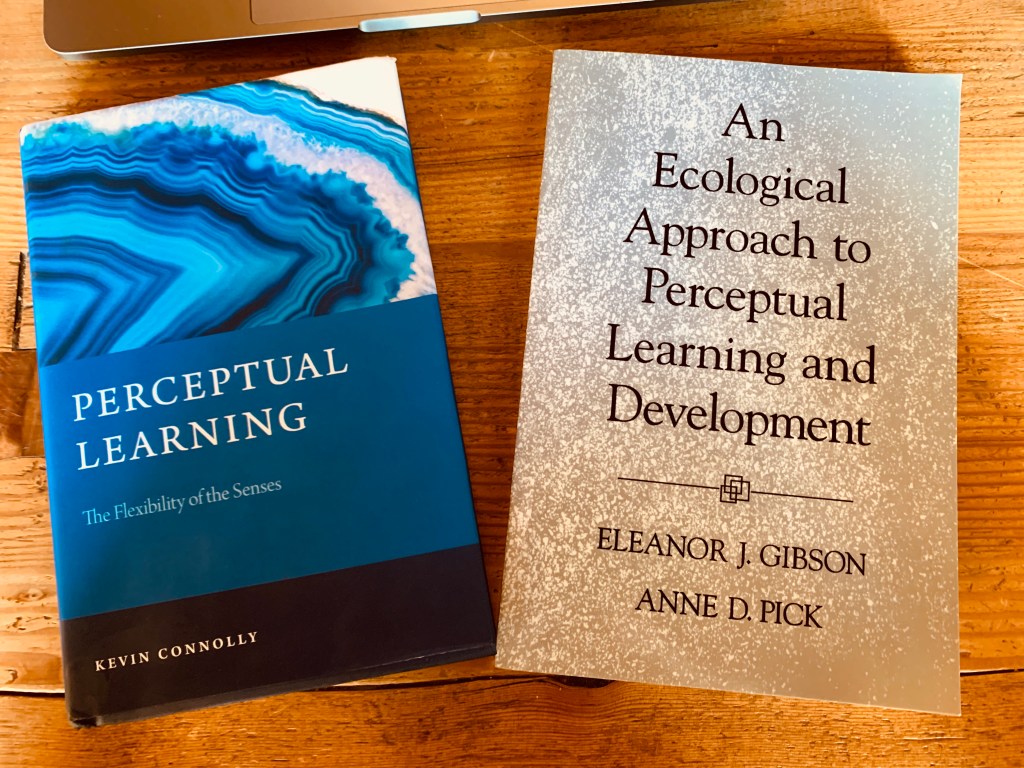
Scientists, philosophers, and contemplatives have long sought to understand the connection between rationality and intuition. In many cases, this relation has been expressed through a bifurcation of discursive, conceptual, and propositional faculties and emotional, sensory, and impressionistic ones. The former have often been associated with cognition, intelligence, and creativity, while the latter have historically taken a back seat, forced into the world of illusions, errors, and bodies. Recently, however, new fields of research have challenged this binary, suggesting that the bright line between these capacities should be rethought. Cognitive scientists and psychologists working on perceptual learning represent a leading edge of this discussion. In this talk, I will explore the basic premise of perceptual learning—namely, that embodied sensory systems are flexible, trainable, and intelligent—to reexamine the relationship between rationality and intuition. While people readily accept that humans can acquire new knowledge, concepts, and languages to influence how they generate interpretations and make inferences about their environments, I will suggest that the body’s physiology is likewise capable of learning, and that intuition has its own form of intelligence that can be developed in the direction of increasingly subtle, spontaneous, and creative engagements with the world. To this end, I will use examples from contemplative practice, art and aesthetics, and athletics to express the premise of perceptual learning. On this view, perceptual learning is a mode of intuition-making, an integral component of larger sense-making efforts that include rationality and intuition alike.



 Knowledge Ecology